Best Smart Bird Feeder Cameras of 2026
Based on analysis of user reviews, manufacturer specs, and published lab data, research and user data point to the standout smart bird feeder cameras for 2026. AI identification accuracy, solar reliability, and app quality are the defining factors separating the best from the rest.
Quick Comparison
| Product | Best For | Top Pro | Top Con | Link |
|---|---|---|---|---|
Smart Bird Feeder with Camera Solar Powered, 2K HD Video, AI Bird Species Identification, RedEditor's Choice | Best Overall Smart Feeder Camera | Solar panel keeps the camera running without frequent charging | Requires Wi-Fi for app features and AI identification | Amazon |
HEAPETS Bird Feeder with Camera Solar Powered, 3K HD Video, AI Bird Recognition, BrownTop Rated | Best 3K Solar Smart Feeder | 3K HD resolution exceeds most competitors in this solar price range | Brown colorway may not suit all garden aesthetics | Amazon |
HARYMOR Bird Feeder with Camera AI Identify Birds Species Solar Powered, 2K HD, GreenBest Value | Best Budget Solar Smart Feeder | Competitive price for solar-powered AI smart feeder combination | App and AI features are more basic than premium alternatives | Amazon |
Kiwibit Smart Bird Feeder with Camera Solar Powered, No Subscription, 4K Live Stream | Best No-Subscription 4K Feeder | 4K live stream with no subscription required after purchase | 4K recording uses microSD storage faster than lower-resolution models | Amazon |
NETVUE by Birdfy Smart Bird Feeder 2K HD AI Camera Solar Powered, Color Night Vision | Best AI Smart Feeder with Color Night Vision | Color night vision captures vivid footage at dusk and dawn | Full AI species database access requires Birdfy+ subscription | Amazon |
Kiwibit Smart Bird Feeder with Camera Solar Powered, 4K Video Live Stream, Green | Best Green 4K Solar Feeder | 4K resolution delivers sharp detail for field mark identification | Solar charging requires at least partial daily sun exposure | Amazon |
Kiwibit Solar Smart Bird Feeder with Camera, AI Bird Species Identification, 8MP Photos, 4K UHD | Best 4K UHD with High-Res Still Photos | 8MP still photo capture alongside 4K UHD video recording | Higher price point than most 2K solar alternatives | Amazon |
Our Top Picks

Smart Bird Feeder with Camera Solar Powered, 2K HD Video, AI Bird Species Identification, Red
Solar-powered 2K HD smart feeder with real-time AI bird species identification and weatherproof design — a well-rounded pick for backyard birders who want hands-free monitoring.
Pros
- Solar panel keeps the camera running without frequent charging
- 2K HD video delivers clear footage for species identification
- Real-time AI species ID notifies you the moment a new bird arrives
Cons
- Requires Wi-Fi for app features and AI identification
- Solar performance drops in heavily shaded or overcast locations
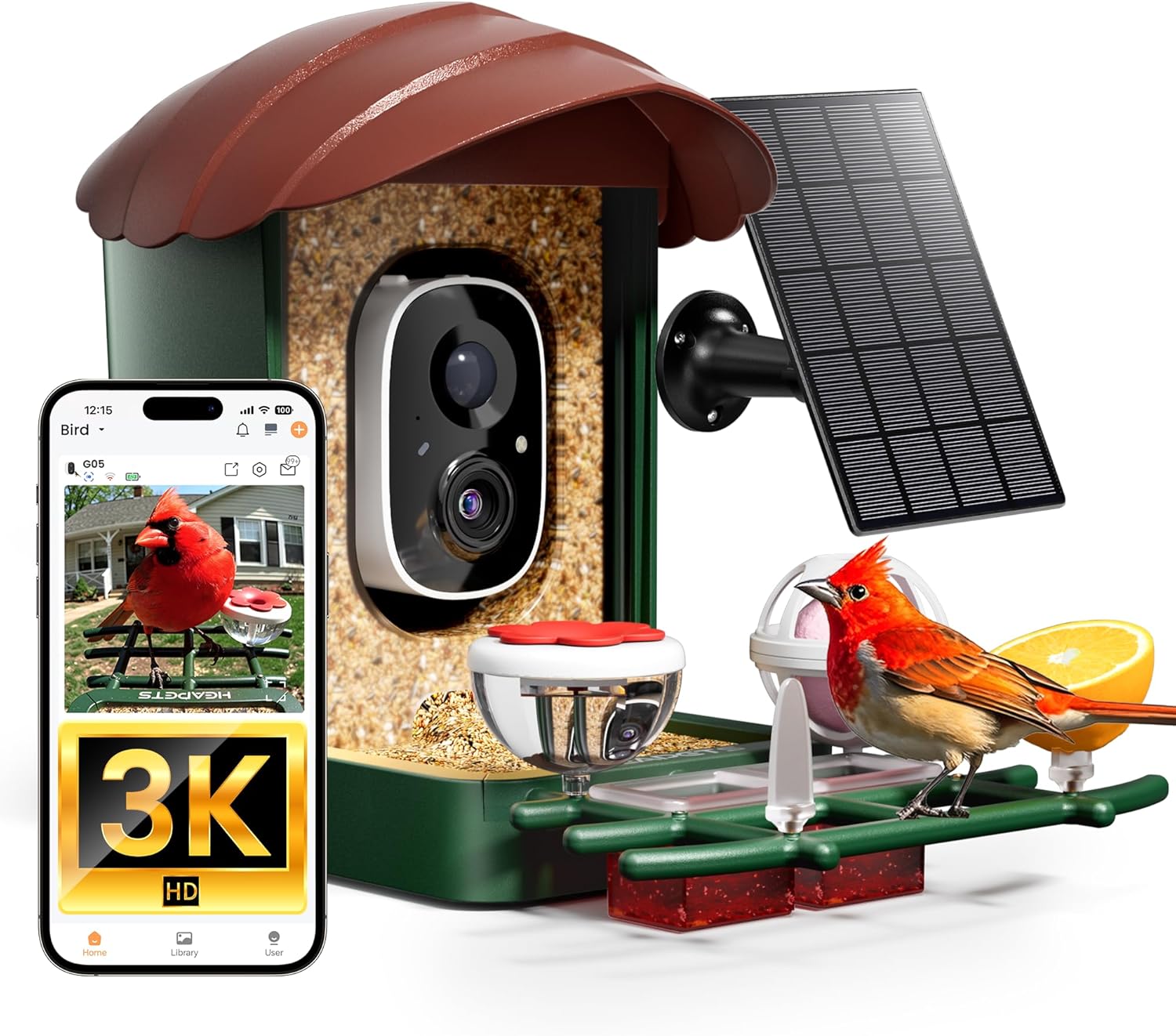
HEAPETS Bird Feeder with Camera Solar Powered, 3K HD Video, AI Bird Recognition, Brown
HEAPETS steps up to 3K video resolution with solar power and AI bird recognition — offering sharper footage than most solar feeders at a competitive price point.
Pros
- 3K HD resolution exceeds most competitors in this solar price range
- Solar-powered with weatherproof housing for all-season outdoor use
- Push notifications alert you to bird visits in real time
Cons
- Brown colorway may not suit all garden aesthetics
- AI recognition database is smaller than premium brands

HARYMOR Bird Feeder with Camera AI Identify Birds Species Solar Powered, 2K HD, Green
HARYMOR combines solar power, 2K HD video, and AI species identification into one of the most affordable smart feeder packages on the market.
Pros
- Competitive price for solar-powered AI smart feeder combination
- 2K HD captures enough detail for common backyard species identification
- Green finish blends naturally into garden settings
Cons
- App and AI features are more basic than premium alternatives
- Seed capacity is smaller than larger feeder designs
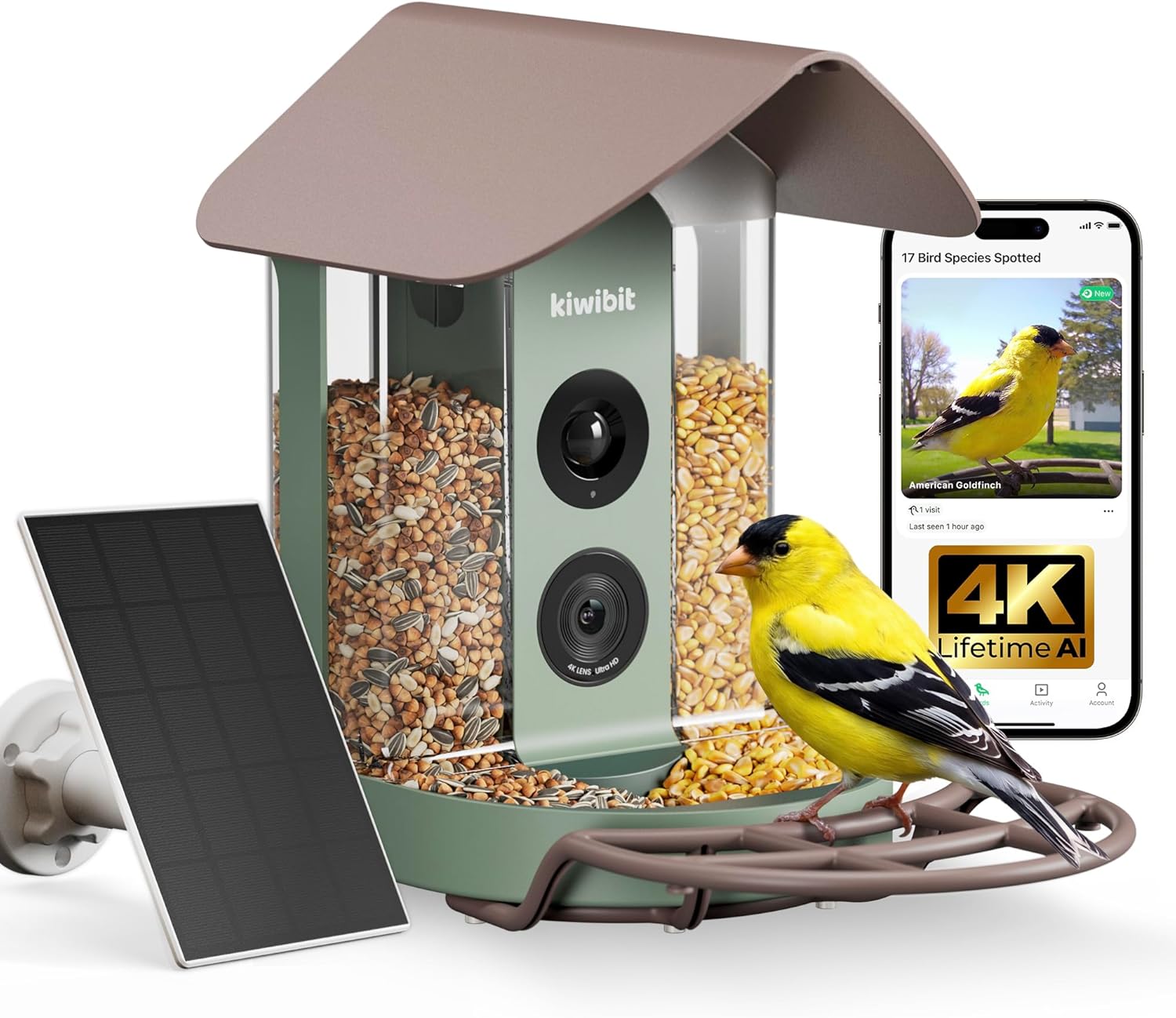
Kiwibit Smart Bird Feeder with Camera Solar Powered, No Subscription, 4K Live Stream
Kiwibit's no-subscription 4K solar feeder delivers live streaming without ongoing costs — ideal for birders who want premium resolution without monthly fees.
Pros
- 4K live stream with no subscription required after purchase
- Solar-powered for continuous outdoor operation
- Local storage eliminates dependence on cloud services
Cons
- 4K recording uses microSD storage faster than lower-resolution models
- App interface has a steeper learning curve than some competitors

NETVUE by Birdfy Smart Bird Feeder 2K HD AI Camera Solar Powered, Color Night Vision
NETVUE's Birdfy platform brings a large AI species database and full-color night vision to a solar-powered feeder — excellent for birders who want evening and dawn capture.
Pros
- Color night vision captures vivid footage at dusk and dawn
- Birdfy AI species database covers a wide range of North American birds
- Solar panel provides reliable year-round power in most US regions
Cons
- Full AI species database access requires Birdfy+ subscription
- Larger feeder profile may initially deter more timid species

Kiwibit Smart Bird Feeder with Camera Solar Powered, 4K Video Live Stream, Green
Kiwibit's green-finish 4K solar feeder offers the same high-resolution live streaming as its sibling model in a garden-friendly colorway with AI species identification included.
Pros
- 4K resolution delivers sharp detail for field mark identification
- Green finish integrates naturally into backyard garden settings
- Real-time species identification notifies you of each new visitor
Cons
- Solar charging requires at least partial daily sun exposure
- 4K storage demands a high-capacity microSD card
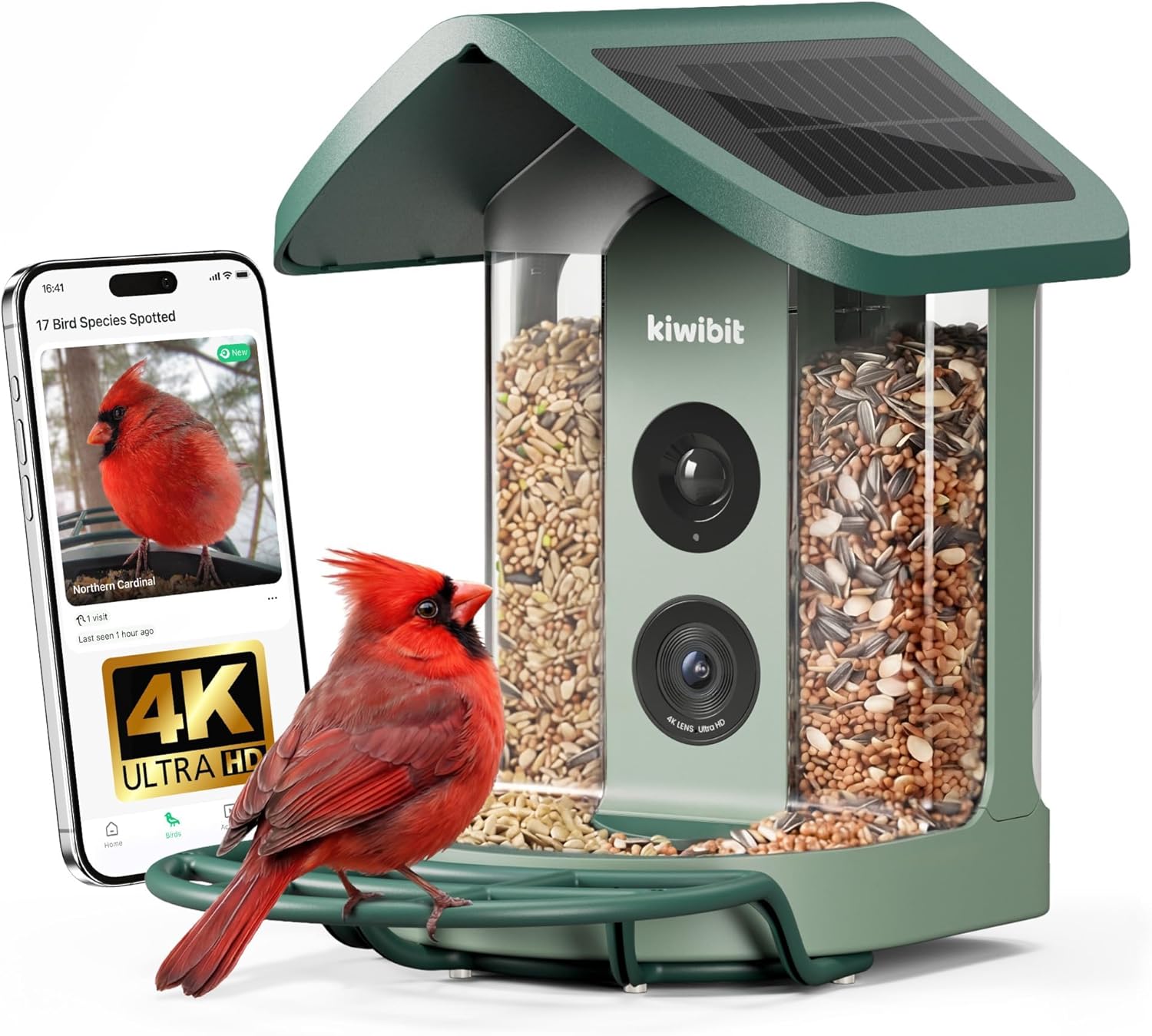
Kiwibit Solar Smart Bird Feeder with Camera, AI Bird Species Identification, 8MP Photos, 4K UHD
Kiwibit's 4K UHD camera with 8MP still photo capture makes it a strong choice for birders who want both video and high-resolution identification images from the same feeder.
Pros
- 8MP still photo capture alongside 4K UHD video recording
- AI species identification builds a personal bird visit log
- Solar-powered operation reduces maintenance between refills
Cons
- Higher price point than most 2K solar alternatives
- Requires adequate Wi-Fi signal at outdoor feeder location
Buying Guide
Choosing the right smart bird feeder camera involves balancing image quality, AI capabilities, power source, storage options, and budget. Here's what to look for.
AI Bird Identification
The AI identification engine is the headline feature of any smart bird feeder camera. The best systems identify species in real time, tag clips automatically, and build a personal life list in the app. Pay attention to the species database size: some models cover only 200 common North American birds, while premium options identify 10,000+ species worldwide.
Image Quality & Resolution
Resolution matters most when you want to identify subtle field marks. The minimum recommended is 1080p Full HD, though 2K and 4K offer a noticeably better experience for sharing clips online or printing photos. Look for cameras with HDR processing for bright backyard scenes, and color night vision for dusk and dawn feeding sessions.
Power Source
You have three options: battery-only, solar-assisted, or wired. Battery-only cameras typically last 2–4 weeks per charge. Solar-assisted models supplement battery power, keeping cameras operational through the seasons with minimal intervention. For most backyards, a solar-assisted camera offers the best balance of convenience and reliability.
Storage & Subscription Costs
Smart bird feeder cameras handle storage in two ways: local microSD or cloud subscription. Local storage requires no monthly fees but requires manual card management. Cloud subscriptions (typically $3–$12/month) offer automatic backup and AI clip organization. Factor the 12-month subscription cost into your total budget when comparing cameras.
Weatherproofing
Your camera will live outdoors year-round through rain, snow, heat, and humidity. Look for an IP rating of at least IP65 (dust-tight, water-resistant under direct spray). Higher-end cameras carry IP66 or IP67 ratings for more extreme conditions. Avoid cameras without published IP ratings for year-round outdoor use.